
In Luke 13:10-17, Jesus heals a woman who had been disabled for eighteen years, confronts opposition in the synagogue over Sabbath day work, and reveals the true meaning of the kingdom of God.
The story combines healing, teaching, and a powerful statement about compassion over legalism.
The Setting: Sabbath Day in the Synagogue
The event takes place on the Sabbath day while Jesus is teaching in a synagogue.
The Sabbath was central to Jewish life, a day set apart for rest and worship according to the Law in the Old Testament. (Exodus 20:8-11)
Work was forbidden, and religious leaders closely guarded its observance.
Luke records that Jesus was actively teaching when He saw a woman who had been suffering for eighteen years.
She was bent over and unable to straighten herself.
The text describes her condition not merely as physical disability but as a form of spiritual oppression—“a daughter of Abraham whom Satan has bound.”
This setting is important. The synagogue represents structured religion, the Sabbath represents sacred time, and Jesus stands at the center as both teacher and healer.
The Woman: Eighteen Years of Suffering
The woman had endured eighteen years of suffering. Her life was marked by pain, limitation, and likely social isolation. In a culture where physical conditions were often misunderstood, she may also have carried stigma.
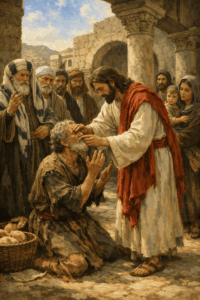
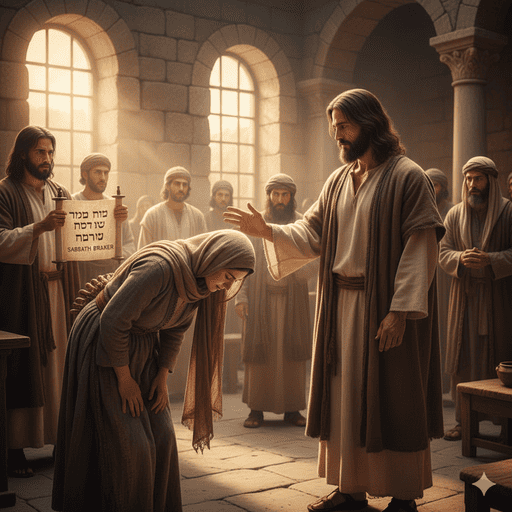
When Jesus sees her, he does not wait to be asked. He calls her forward and says, “Woman, you are set free from your disability.”
He lays his hands on her, and immediately she straightens up and praises God.
This healing is personal and direct. Jesus addresses her dignity by calling her forward publicly.
He restores her body, but He also restores her place among the people. Her response—glorifying God—shows that the healing reveals divine power at work.
The Reaction: Conflict Over Sabbath Work
Instead of rejoicing, the synagogue leader is indignant. He argues that there are six days for work and that healing should not happen on the Sabbath day. His objection is not about whether the woman was healed, but about when it happened.
This moment exposes the tension between rigid religious interpretation and living compassion.
The leader treats healing as prohibited work. Jesus responds by pointing out their inconsistency: they untie their ox or donkey to give it water on the Sabbath. If they care for animals, how much more should a woman—“a daughter of Abraham”—be set free?
The argument reframes the meaning of Sabbath rest. True Sabbath is not the absence of action but the presence of mercy. Freeing someone from suffering is not a violation of God’s law; it fulfills it.
“Daughter of Abraham”: Identity and Restoration
One of the most powerful phrases in the passage is “daughter of Abraham.” This term affirms the woman’s covenant identity. She is not marginal. She belongs to the people of God.
By using this phrase, Jesus elevates her status in front of the synagogue. He challenges the assumption that her condition made her less worthy. Instead, he ties her healing to the promises of the kingdom of God.
This language emphasizes that the healing is not random. It is a sign of the kingdom breaking into the world—restoring what evil had distorted.
The Kingdom of God Revealed
The story highlights several themes central to the kingdom of God:
- Power over evil – The woman’s condition is described as bondage.
- Compassion over legalism – Mercy defines true obedience.
- Restoration of dignity – She stands upright and praises God.
- Public witness – The people rejoice at the glorious things being done.
Jesus’ actions reveal that the kingdom is not abstract theology. It is visible in healing, freedom, and renewed life.
The crowd responds differently from the synagogue leader. While his opposition grows, the people rejoice. The contrast shows two possible responses to divine power: resistance or praise.
Healing and Teaching Combined
Throughout Luke’s Gospel, Jesus’ teaching and healing often occur together. Here, the miracle becomes a living lesson. The healing illustrates what Jesus had been teaching about God’s reign.
The phrase “six days for work” reflects a strict interpretation of the Sabbath commandment. Yet Jesus demonstrates that healing is not ordinary labor. It is an act of liberation.
By linking the woman’s freedom to Sabbath, Jesus presents a deeper meaning of rest. True rest is release from bondage—physical, spiritual, and social.
The Role of Faith and Initiative
Interestingly, the passage does not mention the woman asking for healing. Jesus sees her first. This detail highlights divine initiative. Grace moves toward suffering before being requested.
Her response—praising God—shows faith expressed after healing. The story emphasizes that God’s compassion is not transactional. The healing flows from Jesus’ authority and mercy.
The Broader Message About Work and Mercy
The synagogue leader’s objection centers on work. Yet Jesus reframes the question: if it is lawful to care for animals on the Sabbath, it is certainly lawful to restore a human being.
This argument exposes misplaced priorities. The law was intended to reflect God’s character. When interpretation removes compassion, it loses alignment with that character.
The Sabbath was meant to bless people, not burden them. By healing on that day, Jesus shows that the kingdom of God advances through acts of mercy.
Spiritual and Social Implications
The healing touches multiple layers:
- Physical – The woman stands upright.
- Spiritual – She is described as freed from satanic bondage.
- Communal – She is restored publicly within the synagogue.
- Theological – The event reveals who Jesus is.
Calling her forward in a public setting reverses years of invisibility. She becomes a visible sign of divine power.
The narrative also confronts religious authority. Jesus challenges leaders who prioritize regulation over restoration. This tension appears repeatedly in the Gospel accounts.
Why This Story Matters Today
The account of Jesus healing the woman on the Sabbath continues to resonate because it addresses enduring questions:
- What is the purpose of religious practice?
- How should law and compassion relate?
- What does true freedom look like?
The story teaches that suffering is not ignored in the kingdom of God. Jesus notices individuals others overlook. He values dignity over strict ritualism.
It also warns against empty religion. The phrase “religion without Jesus” could summarize the synagogue leader’s posture—structure without compassion, rule without mercy.
Key Themes Summarized
- Jesus acts with authority and compassion.
- The woman represents long-term suffering and restoration.
- The Sabbath day becomes the setting for redefining work.
- The synagogue becomes a stage for public teaching.
- The kingdom of God is revealed through healing.
- Power over evil demonstrates divine authority.
- Daughter of Abraham affirms covenant identity.
- People rejoice, while opposition exposes hardened hearts.
Conclusion
In Luke 13:10–17, Jesus heals a woman who had been disabled for eighteen years on the Sabbath day. The miracle is immediate, public, and transformative. It restores her body, affirms her identity, and reveals the heart of God.
The controversy that follows clarifies the deeper message: the Sabbath is fulfilled, not violated, when mercy triumphs over rigid interpretation. The kingdom of God is not merely proclaimed; it is enacted through liberation and healing.
This account shows that true worship includes compassion, true teaching includes action, and true rest includes freedom. And the Sabbath is meant for that.
My Letter To A Sunday Keeper – Sabbath Documentary

The Days of Noah – Powerful Documentary (Video Format)

Bible Studies – Written Format