
No—Jesus did not end the Sabbath.
But He did radically challenge how it was understood, practiced, and authorized, which is why the question keeps coming up.
If you’ve ever wondered whether Jesus abolished the Sabbath, replaced it, or made it optional, you’re not alone.
This question sits at the intersection of biblical law and Christian theology—and the answer depends heavily on what we mean by “end.”
To understand what Jesus actually did with the Sabbath, we need to start where the Sabbath itself begins, then look closely at how Jesus interacted with it.
1. The Sabbath in Genesis
The Sabbath predates Israel. According to Genesis 2:2–3, God rested on the seventh day after creation and sanctified it. Later, in the Ten Commandments (Exodus 20:8–11), Sabbath observance becomes a divine command.
But the Sabbath is more than a day off.
In Exodus 31:16–17, it is described as a sign of the covenant between God and Israel—an identifying marker of Israel’s relationship with God. Observing the Sabbath was an act of loyalty, obedience, and trust.
Key features of the Sabbath:
- It is commanded by God, not invented by religious leaders
- It is tied to creation and redemption
- It functions as a covenantal sign, not merely a ritual rule
This matters because if the Sabbath is deeply embedded in God’s covenantal framework, then the idea that Jesus casually “ended” it immediately raises theological tension.
2. Jesus’ Sabbath Actions: Violation or Confrontation?
Most people assume Jesus opposed the Sabbath because of what He did on it.
In the Gospels, Jesus:
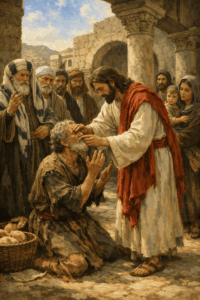
- Heals on the Sabbath (Mark 3; Luke 13)
- Allows his disciples to pick grain on the Sabbath (Mark 2:23–28)
- Deliberately performs public acts that provoke controversy
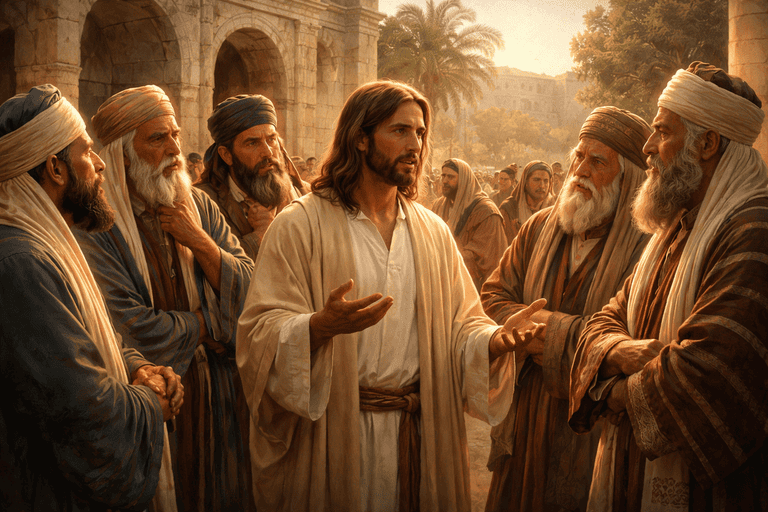
Importantly, Jesus is never accused of ignoring the Sabbath. He is accused of breaking Sabbath rules—specifically, the rules enforced by religious authorities.
This distinction is crucial.
The Pharisees had developed detailed interpretive traditions defining what counted as “work.”
Healing, for example, was often restricted unless a life was immediately at risk. Jesus openly defied these boundaries, but He did so with scriptural arguments of his own.
When challenged, Jesus responds:
- With precedent (David eating consecrated bread)
- With purpose (“The Sabbath was made for man…”)
- With authority (which leads us to the next section)
Jesus’ actions don’t suggest abolition. They suggest conflict over interpretation and authority.
3. “Lord of the Sabbath”: Authority, Not Rejection
One of the most quoted—and misunderstood—statements Jesus makes about the Sabbath is found in Mark 2:27–28:
“The Sabbath was made for man, not man for the Sabbath. Therefore the Son of Man is Lord even of the Sabbath.”
This is not a dismissal of the Sabbath. It is a claim of lordship over it.
Calling oneself “Lord of the Sabbath” implies:
- The Sabbath still exists
- The Sabbath still matters
- Jesus has ultimate authority over how it is understood and lived
By claiming lordship over the Sabbath, Jesus is making a messianic—and arguably divine—claim, not a reformist suggestion.
Interpretations of this statement generally fall into three camps:
- Jesus reinterprets the Sabbath correctly
- Jesus fulfills the Sabbath’s deeper purpose
- Jesus has authority to transcend it
All three assume the Sabbath has meaning; none require that it be “ended” during Jesus’ ministry.
4. “I Did Not Come to Abolish the Law”: Fulfillment Explained
Perhaps the strongest evidence against the idea that Jesus ended the Sabbath comes from Matthew 5:17:
“Do not think that I have come to abolish the Law or the Prophets; I have not come to abolish them but to fulfill them.”
Jesus explicitly denies abolishing the law. Instead, He introduces the concept of fulfillment, which becomes central to later Christian theology.
But fulfillment is not the same as cancellation.
In the Sermon on the Mount, Jesus repeatedly intensifies the Law rather than discarding it:
- Anger becomes murder of the heart
- Lust becomes adultery of the heart
- External obedience gives way to internal transformation
Applied to the Sabbath, fulfillment may mean:
- Moving from rule-keeping to restorative purpose
- Shifting from restriction to mercy
- Re-centering the Sabbath on human flourishing and divine authority
Nothing in Jesus’ teaching suggests the Sabbath was meaningless or void. What changes is how it is understood in light of who Jesus is.
So Why Do Many Christians Say Jesus Ended the Sabbath?
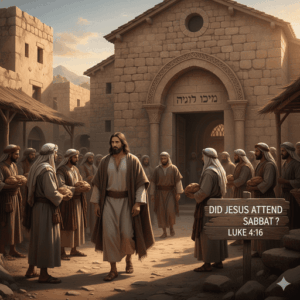
The idea that the Sabbath ended usually comes after Jesus, not from Jesus himself. Because He kept the Sabbath Himself. (Luke 4:16)
The apostles were also keeping the Sabbath day. (Acts 16:13; 17:2; 18:4)
Unfortunately, the Christian Church slowly started to keep both the Sabbath and Sunday as holy in honor of resurrection.
Nowadays, we find the majority of christians worshiping on Sunday. But the Bible never mentions anything about the changing of the Sabbath to the first day.
Conclusion: Did Jesus End the Sabbath?
Jesus did not end the Sabbath.
He challenged human control over it, exposed distortions in its practice, and claimed lordship over sacred time itself.
God’s Ten Commandments never changed and never will be! They are the foundation of His throne and character!
And the fourth commandment on the Sabbath is to be kept today holy as He expects us to keep the other nine! (Matthew 5:17-19)
My Letter To A Sunday Keeper – Sabbath Documentary

The Days of Noah – Powerful Documentary (Video Format)

Bible Studies – Written Format